Thứ Hai, 15 tháng 8, 2011

New BRIGHT LIGHTS FILM JOURNAL


Bodies Politic/Body Politics
"Your body is a microcosm of all existence." – On Michelle LeBrun's Death: A Love Story: Bodies Politic/Body Politics: The Political and the Personal in Contemporary Film Essays by Matt Brennan
Film Studies For Free continues to catch up with August's bumper crop of new online journal issues. Over the weekend, it has been thoroughly enjoying the lively and eclectic brilliance of Bright Lights Film Journal's latest offering of very savvy, and sometimes sassy, articles.

They may not be 'peer reviewed' in the strict scholarly sense, but film studies academics and cinephiles will miss these at their peril.

The entire table of contents for Issue 73 is thus reproduced below. And don't miss Bright Lights After Dark, BLFJ's fabulous film blog for further, essential, movie musings. 

Bright Lights Film Journal, August 2011 | Issue 73

From the Editor
Features
Articles
Movies
Television
Short Features
Stars
Directors
Festivals
Columns
Books
  • They Live, by Jonathan Lethem. Reviewed by Chad Trevitte

Thứ Sáu, 12 tháng 8, 2011

New SCREENING THE PAST


Image from After the Rainbow (2009), a two screen video installation by Soda_Jerk, the Australian artist sisters Dom and Dan Angeloro, as discussed in 'The Colour of Nothing: Contemporary Video Art, SF and the Postmodern Sublime' by Andrew Frost
[C]inema is surely a paradoxical object: its medium-specific possibility seems to have been well and truly overrun by its tendency to intermediality, its fundamental impurity. That is where its true materiality-effect, today, is situated: in the palpable aura of a mise en scène that is always less than itself and more than itself, not only itself but also its contrary, ever vanishing and yet ever renewed across a thousand and one screens, platforms and dispositifs. [Adrian Martin, 'Turn the Page: From Mise en scène to Dispositif ', Screening the Past, Issue 31, 2011]

Below, Film Studies For Free presents the table of contents to the latest online issue of Screening the Past.

It's a special issue on the 'intermediality' of cinema, guest-edited by the brilliant and influential Australian film critic and scholar Adrian Martin. It begins with a marvellous contribution by him to the topic. There's also an unmissable 'rerun' of Nicole Brenez's remarkable essay 'Incomparable Bodies'.

Admirers of Martin's work should also be more than excited by the news that the first issue of LOLA, a new film journal edited by him and the film writer and blogger extraordinaire Girish Shambu, is "coming soon"...


Screening the Past, Issue 31 - Cinema Between Media 
(Incorporating U-matic to YouTube, a selection of papers from a National Symposium celebrating three decades of Australian Indigenous Community Filmmaking edited by Therese Davis).

Reviews

Thứ Hai, 8 tháng 8, 2011

Latest five volumes of REFRACTORY: A Journal of Entertainment Media


Frame grab from Spider (David Cronenberg, 2002). Read Samatha Lindop's 2011 article on this film here. For another interesting, psychiatrically-informed account of Cronenberg's film, see here

Thanks to Adrian Martin (whose video version of his Ritwik Ghatak talk is now online, by the way), Film Studies For Free heard about the latest issue of the online Australian journal Refractory: A Journal of Entertainment Media. And thanks to that, FSFF realised it hadn't really mentioned an issue of Refractory since Volume 14, 2009 in its entry on "Split Screens". So, below are direct links to all of the contents of this great journal since that issue. And FSFF promises not to be quite so pommily slow next time this journal publishes one of its characteristically excellent collections of film and media studies...

Refractory, Volume 19, 2011
  1. Blockbusters for the YouTube Generation: A new product of convergence culture – Kristy Hess and Lisa Waller

  2. ‘Out wiv the old ay plumma?’ The Uncanny Marginalized Wastelands of Memory and Matter in David Cronenberg’s Spider – Samantha Lindop

  3. A Moving Image Experience: Il Cinema Ritrovato, Bologna, June-July, 2010 – Wendy Haslem

  4. “A series of emotional remembrances”: Echoes of Bernard Herrmann -Daniel Golding

  5. Don Draper On The Couch: Mad Men and the Stranger to Paradise – Mark Nicholls

Refractory, Volume 18, 2011
  1. Editorial: Transitions in Popular Culture – Matthew Sini and Angie Knaggs  

  2. “Never my soul”: Adaptations, Re-makes and Re-imaginings of Yeşilçam Cinema – Can Yalcinkaya  

  3. Looking Past Seeing: Imaginative Space and Empathetic Engagement in The Treasure of the Sierra Madre and There Will Be Blood – Elliott Logan

  4. Struggling to find their place: Indigenous youth, identity, and storytelling in Beneath Clouds and Samson and Delilah – Samantha Fordham

  5. Transgeneric Tendencies in New Queer Cinema – Matthew Sini

  6. Before Priscilla: Male-to-Female Transgender in Australian Cinema until the 1990s – Joanna McIntyre

  7. From Night and Day to De-Lovely: Cinematic Representations of Cole Porter – Penny Spirou

  8. (Em)Placing Prison Break: Heterotopic Televisual Space and Place – Angie Knaggs

  9. “Think Smart”: multiple casting, critical engagement and the contemporary film spectator – Nicole Choolun

Refractory, Volume 17, 2010
  1. From Cult Texts to Authored Languages: Fan Discourse and the Performances of Authorship – Karolina Agata Kazimierczak

  2. The Pinball Problem – Daniel Reynolds

  3. The Invisible Medium: Comics Studies in Australia – Kevin Patrick

  4. Acculturation of the ‘Pure’ Economy: Sci Fi, IT and the National Lampoon – Rock Chugg

  5. Subversive Frames: Vermeer And Lucio Fulci’s SETTE NOTE IN NERO – Alexandra Heller-Nicholas

  6. Ringu/ The Ring: Tracing the Analog Spirit in a Digital Era – Michael Fisch

  7. Keaton and the Lion: A Critical Re-evaluation of The Cameraman, Free and Easy and Speak Easily – Anna Gardner

  8. Rosy-Fingered Dawn: The Natural Sublime in the work of Terrence Malick – Dimitrios Latsis

Refractory, Volume 16, 2009
  1. Editorial ‘All Your Base Are Belong to Us’: Videogames and Play in the Information Age : Tom Apperley and Justin Clemens

  2. A Critique of Play – Sean Cubitt

  3. ‘The code which governs war and play’: Computer games, sport and modern combat – Jeff Sparrow

  4. Being Played: Games Culture and Asian American Dis/identifications – Dean Chan

  5. “I’m OK”: How young people articulate ‘violence’ in videogames – Gareth Schott

  6. How to Do Things With Images – Darshana Jayemanne

  7. Myths of Neoconservatism and Privatization in World of Warcraft – Kyle Kontour

  8. Babelswarm -Justin Clemens, Christopher Dodds and Adam Nash

Refractory, Volume 15, 2009

Double Issue: General Issue and Television Issue, Editors: Angela Ndalianis and Lucian Chaffey
  1. Reality is in the performance’: Issues of Digital Technology, Simulation and Artificial Acting in S1mOne – Anna Notaro

  2. The Neo-baroque in Lucha Libre - Kat Austin

  3. Ryan Is Being Beaten: Incest, Fanfiction, and The OC – Jes Battis

  4. Mobile Content Market: an Exploratory Analysis of Problems and Drivers in the U.S. – Giuseppe Bonometti, Raffaello Balocco, Peter Chu, Shiv Prabhu, Rajit Gadh

  5. Televisual control: The resistance of the mockumentary – Wendy Davis

  6. The Classic Hollywood Town at the Dawn of Suburbia - Stephen Rowley

  7. Digital Intervention: Remixes, Mash Ups and Pixel Pirates – Amanda Trevisanut

  8. The Bill 1984 – 2009: Genre, Production, Redefinition - Margaret Rogers

  9. Guiding Stars – Carly Nugent

Chủ Nhật, 7 tháng 8, 2011

Forty more film and moving image studies theses online

Frame grab from Diary of a Country Priest (Robert Bresson, 1951), a film discussed in Andrew Klevan's PhD thesis Disclosure of the Everyday

Film Studies For Free brings you its latest roundup of links to online and openly accessible film and moving image studies theses. These links (all of them to theses stored in European research repositories) will very shortly be added to FSFF's permanent listing of already more than 150 theses (the vast majority of them at PhD level, though one or two high quality MPhils are also included).

Particular highlights in this roundup, in FSFF's view, are the recent online publication of Andrew Klevan's 1996 thesis Disclosure of the everyday, Catherine Fowler's The films of Chantal Akerman (1995), Martin Stollery's 1994 Alternative empires on Soviet montage cinema, the British documentary movement and colonialism, Ximena Triquell's 2000 socio-semiotic approach to cinematic representations of the Argentine military dictatorship (1976-1983),  and David Martin-Jones' 2002 Becoming-other in time: the Deleuzian subject in cinema.

If any of FSFF's esteemed readers know that their own thesis is available online but not yet added to these listings, please email this blog with a link.
    1. Aaltonen, Minna-Ella, Touch, taste and devour: phenomenology of film and the film experiencer in the cinema of sensations, MPhil Thesis, University of Glasgow, 2011
    2. Archibald, David, The Spanish Civil War in cinema, PhD Thesis, University of Glasgow, 2004
    3. Baker, Rosemari Elizabeth, Shklovsky in the Cinema, 1926-1932, PhD Thesis, Durham University, 2010
    4. Berridge, Susan, Serialised sexual violence in teen television drama series, PhD thesis, University of Glasgow, 2010
    5. Bissell, Laura, The female body, technology and performance: performing a feminist praxis. PhD thesis University of Glasgow, 2011
    6. Bourkiba Larbi, Abdelrhaffar, Parody and ideology: The case of Othello, PhD Thesis, Universitat de València, 2005
    7. Carrasco, Rocio, Of men and cyborgs: the construction of masculinity in contemporary U.S. science fiction cinema, PhD Thesis, Universidad de Huelva, 2010
    8. Chalkou, Maria, Towards the creation of 'quality' Greek national cinema in the 1960s, PhD thesis, University of Glasgow, 2008
    9. Copsey, Dickon, Race, gender and nation : the cultural construction of identity within 1990s German cinema, PhD Thesis, University of Glasgow, 2004 
    10. Dymek, Mikolaj, Industrial Phantasmagoria : Subcultural Interactive Cinema Meets Mass-Cultural Media of Simulation, PhD Thesis, KTH, Sweden, 2010
    11. Ferguson, Laura E., Kicking the Vietnam syndrome? Collective memory of the Vietnam War in fictional American cinema following the 1991 Gulf War, PhD Thesis, University of Glasgow, 2011 
    12. Fowler, Catherine, The films of Chantal Akerman: a cinema of displacements, PhD Thesis, University of Warwick, 1995
    13. Goode, Ian, Voices of inheritance: aspects of British film and television in the 1980s and 1990s, PhD Thesis, University of Warwick, 2000
    14. Heeren, Catherine Quirine van, Contemporary Indonesian film : spirits of reform and ghosts from the past, PhD Thesis, Leiden University, 2009
    15. Hibberd, Lynne A., Creative industries policy and practice. a study of BBC Scotland and Scottish Screen, PhD thesis, University of Glasgow, 2009
    16. Hinchliffe, Alexander, Contamination and containment: representing the pathologised other in 1950s American cinema, PhD Thesis, University of Nottingham, 2010
    17. Johnston, Cristina, The use of the spoken word in contemporary French minority cinema, with specific reference to banlieue and gay cinema (1990-2000), PhD Thesis, University of Glasgow, 2005
    18. Joo, Chang-Yun, The interpretative positions of the audience and the invitations of television drama, PhD thesis, University of Glasgow, 1997 
    19. King, Martin S., "Running like big daft girls." A multi-method study of representations of and reflections on men and masculinities through "The Beatles", PhD thesis, University of Huddersfield 2009
    20. Kiss, Robert James, The Doppelganger in Wilhelmine cinema (1895-1914) : modernity, audiences and identity in turn-of-the-century Germany, PhD Thesis, University of Warwick, 2000 
    21. Klevan, Andrew, Disclosure of the everyday : the undramatic achievements in narrative film, PhD Thesis, University of Warwick, 1996
    22. Lehin, Barbara, Cinema and society: Thatcher's Britain and Mitterand's France, PhD Thesis, University of Warwick, 2003 
    23. Martin-Jones, David, Becoming-other in time: the Deleuzian subject in cinema, PhD Thesis,  University of Glasgow, 2002 
    24. Morris, Julia, An investigation into subtitling in French and Spanish heritage cinema, PhD Thesis,  University of Birmingham, 2010
    25. Natzén, Christopher, The Coming of Sound Film in Sweden 1928-1932 : New and Old Technologies, PhD Thesis, Stockholm University, 2010 
    26. Newsinger, Jack, From the grassroots: regional film policy and practice in England, PhD Thesis, University of Nottingham, 2010
    27. Pescetelli, M., The art of not forgetting: towards a practical hermeneutics of film restoration, PhD Thesis, University College London, 2011 
    28. Pigott, Michael, Time and film style, PhD Thesis, University of Warwick, 2009
    29. Ragazzi, Rossella, Walking on uneven paths : the transcultural experience of migrant children in France and Ireland, PhD Thesis, Dublin Institute of Technology, 2005
    30. Robinson, Rebecca Grace, Scottish television comedy audiences, PhD thesis, University of Glasgow, 2002
    31. Shand, Ryan John, Amateur cinema: history, theory and genre (1930-80), PhD thesis, University of Glasgow, 2007  
    32. Shields, Ryan John, Amateur cinema: history, theory and genre (1930-80), PhD Thesis, University of Glasgow, 2007
    33. Smit, Alexia Jayne, Broadcasting the body: affect, embodiment and bodily excess on contemporary television, PhD thesis, University of Glasgow, 2010
    34. Smith, Sarah, A complicitous critique: parodic transformations of cinema in moving image art,  PhD thesis, University of Glasgow 2007
    35. Sorrentino, Giuseppe, The Disappearance of the Real - Mass Media in Thomas Pynchon, Don DeLillo and Cormac McCarthy, PhD Thesis, Università degli studi Roma, 2008
    36. Stollery, Martin, Alternative empires : Soviet montage cinema, the British documentary movement and colonialism, PhD Thesis, University of Warwick 1994
    37. Thomas, Sarah, Face-maker : the negotiation between screen performance, extra-filmic persona and conditions of employment within the career of Peter Lorre, PhD Thesis, University of Warwick, 2008
    38. Triquell, Ximena, Projecting history: a socio-semiotic approach to the representations of the military dictatorship (1976-1983) in the cinematic discourses of Argentine democracy, PhD Thesis, University of Nottingham, 2000
    39. Walsh, John, A Space and Time Machine: Actuality Cinema in New York City, 1890s to c. 1905, PhD Thesis, University of Nottingham, 2005
    40. Yam, Chi-Keung, Study of popular Hong Kong cinema from 2001 to 2004 as resource for a contextual approach to expressions of christian faith in the public realm after the reversion to Chinese sovereignty in 1997, PhD Thesis, University of Edinburgh, 2008

    Thứ Bảy, 6 tháng 8, 2011

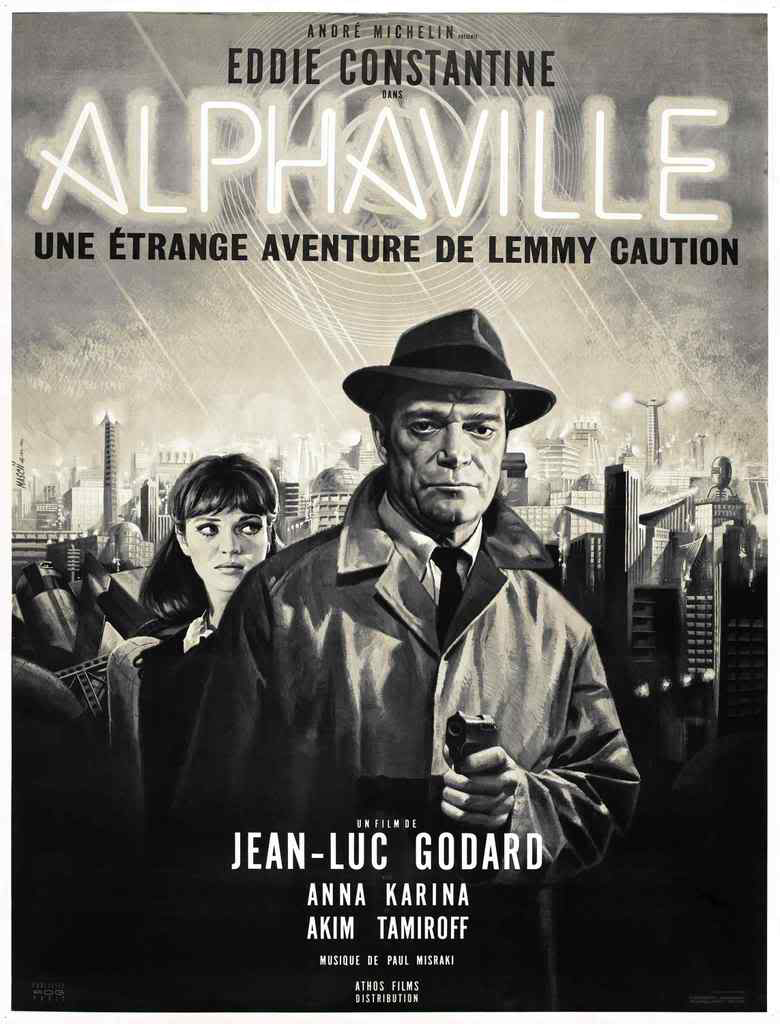
    ALPHAVILLE, a new journal of film and screen media

    A poster of Jean-Luc Godard’s Alphaville, une étrange aventure de Lemmy Caution (1965)

    Alphaville is the first fully peer-reviewed online film journal in Ireland. It is edited by staff and PhD students in Film Studies at University College Cork. It will be published twice a year, in Summer and Winter, with both open and themed issues that will aim to provoke debate in the most topical issues in film and screen studies. [More about Alphaville]
    There is no better title [...] for a new journal that proposes to explore the constitutive hybridity of the moving image—analog and digital, commercial and avant-garde, mainstream and independent, popular and elitist—without forgetting how its roots spread in artistic and productive practices that have always been far more composite and multilayered than our critical categories seemed to wish to account for. Calling for the breaking down of disciplinary boundaries, media fields and critical categories, Alphaville: Journal of Film and Screen Media aspires to be a laboratory for new interpretative ideas on the moving image of yesterday, of today and of tomorrow. This inaugural issue, in particular, foregrounds cultural, spatial, productive and aesthetic issues that aim to set in motion our thinking about European cinema within multilayered critical, cultural and geopolitical models, and in light of the complexity of the flow of images that characterises our media landscape. The transnationality, transculturality and transmediality of contemporary European cinemas are undoubtedly going to shape and occupy the research agenda for some time to come.  [Laura Rascaroli, 'Back to the Future: The European Film Studies Agenda Today']
    There's a new open access film journal on the block, everybody! Great news in Film Studies For Free's humble opinion. Alphaville: Journal of Film and Screen Media has just published its first issue, along with calls for papers for two further issues, to boot.

    The first issue is themed, and here's what its editors say about their choice of organising topic:
    Alphaville Issue 1, European Cinema: Transnational, Transcultural, Transmedial stems thematically from an international graduate film studies conference that we co-organised in May 2010 at University College Cork. The conference addressed the permeability of European spaces—geopolitical, sociocultural, productive and aesthetic—within a post-1989 cinematic context. This Issue, however, moves the focus beyond such a specific—albeit multilayered—epoch, encompassing research on both past and contemporary filmmaking, in a bid to showcase the “movement” that was and still is at the heart of European cinema with regard to its interrelationships of geography, culture and form. Inspired by the many seminal works on European cinema that have gone before it, we seek to contribute to the debate a collection that is at once original, in its theoretical and thematic scope, and fresh, in its demonstration of inspiring new work by early career scholars (an attribute that affords us the knowledge that this thriving area in our field will continue to be so).
    FSFF thinks it's a great issue packed with items of interest for film scholars, beginning with Natalia Pinázza's brilliant article on Sandra Kogut’s multinational coproduction documentary Un passeport hongrois/The Hungarian Passport (2001).

    Tu es très bienvenu Alphaville!

    Alphaville: Journal of Film and Screen Media Issue 1 (Summer 2011)

    Editorial:

    Articles:
    Book Reviews and Festival and Conference Reports:

    [Compiled by Jill Moriarty, Deborah Mellamphy and Stefano Odorico, University College Cork]

    email: alphavillejournal@gmail.com

    Issue 2, Winter 2011, Space and Time in Film.

    Issue 3, Summer 2012, Sound, Voice, Music.

    cfp: http://www.alphavillejournal.com/CallforPapers.html

    Thứ Năm, 4 tháng 8, 2011

    New FILM-PHILOSOPHY on Phenomenology and Psychoanalysis (Herzog, Solondz, Cronenberg, Streitfeld, Eisenstein, Antonioni, Tarkovsky, Zhang Yimou, Forgács)

    Frame grab from Stalker (Andrei Tarkovsky, 1979). Read Adrian Ivakhiv's essay on this film in the latest issue of Film Philosophy

    And the brilliant, online, film journal issues just keep on coming...

    Film Studies For Free is delighted to bring you news of the latest offering from one of the highest quality e-journals of them all - Film-Philosophy.
     
    FP, Vol 15, No 1 (2011) is a special issue on Phenomenology and Psychoanalysis, edited by David Sorfa. FSFF particularly liked Adrian Ivakhiv's 'ecocritical' essay which explores Tarkovsky's Stalker, along with Jacqueline Loeb's fine 'Foucauldian' study of sound in Zhang Yimou's Raise the Red Lantern. But there are other excellent contributions, too. 

    Readers should also note that it is now possible to donate to the journal. Film-Philosophy is an independent Open Access academic journal operating without recurring financial support. Donations of any amount to the journal are gratefully received and provide a means for the editors to continue to provide a journal of the highest quality to its readers. Just click on the "Donations" link on the FP website.

    For those of you who are interested in phenomenological film studies, do take a look, if you haven't already, at FSFF's previous gathering of links to online and openly accessible work on this topic.

    Table of Contents 

    Articles

    Interviews
    • 'Brecht Today: Interview with Alexander Kluge' PDF by Angelos Koutsourakis

    Film Festival Reports
    • Venice Film Festival 2010: The Mad and the Bad and the Dangerous to Know PDF by John Bleasdale
    • Berlin International Film Festival - Berlinale 2011 PDF Alison Elizabeth Frank

    Book Reviews
    • Mark T. Conard, ed. (2009) The Philosophy of the Coen Brothers PDF by Taylor Benjamin Worley
    • Frederick Wasser (2010) Steven Spielberg’s America PDF  by Steven Rybin
    • Claire Molloy (2010) Memento; Geoff King (2010) Lost in Translation; Gary Needham (2010) Brokeback Mountain. American Indies Series PDF by John Bleasdale 
    • Sidney Gottlieb and Richard Allen, eds. (2009) The Hitchcock Annual Anthology: Selected Essays from Volumes 10-15 PDF by Tifenn Brisset 
    • Richard Abel, ed. (2010) Encyclopedia of Early Cinema PDF by Carrie Giunta 
    • Jim Ellis (2009) Derek Jarman's Angelic Conversations PDF by Jason Wakefield 
    • Christopher Lindner, ed. (2009) The James Bond Phenomenon: A Critical Reader. 2nd Edition PDF by Lucy Bolton

    New JUMP CUT: Hollywood, Reframing, International Cinema, Documentary, Economics and Politics, Porn, Independent/Art/Avant-garde, Horror


    Back, nicely bronzed, from its holiday, Film Studies For Free has lots of catching up to do. Let it begin with rushing you, below, the table of contents from the latest, utterly brilliant issue of Jump Cut, No. 53, summer 2011. 

    There is SO much great reading here, much of it deeply politically committed, as is characteristic of this important journal. But please don't miss its marvellous book reviews section, including a look at recent books on film sound by Michael Chanan (thanks for tipping FSFF off about this latest issue, Michael!).

    Hollywood
    Reframing
    International cinema
    Economics and cinema
    Politics of media production and distribution
    Porn
    • Clips, clicks and climax: notes on the relocation and remediation of pornography by Julian Hanich
      Moving-image pornography on the Internet has facilitated and intensified the masturbatory experience due to a double tendency toward privatization and individualization. This becomes particularly obvious when compared to the time when porn films were projected in theaters and consumed with other, mostly anonymous viewers.
    • The excess of porn: response to Julian Hanich by Magnus Ullén
      Considering the relation between pornography and different media is important, yes; but it will be difficult to historicize pornography without first historicizing the mode of reading that gave rise to the concept of porn in the nineteenth century.
    • Back to the Golden Age by Thomas Waugh
      This brief intervention in the current conversation about porn contextualizes the debate within the history of porn studies and Jump Cut’s contribution since the 1970s to a materialist-feminist understanding of sexual representation.
    • Porn: it’s not just about sex anymore by Nina K. Martin
      Porn's shift to online and mobile device mediums has de-stigmatized the term to the point of banality, linking "porn" to non-sexualized notions of excess.
    • Beyond porno chic by Jose B. Capino
      Internet porn viewing and spectatorship at adult video arcades are more similar than we imagine.
    • Pornography, technology, and masturbation: response to Julian Hanich by Peter Lehman
      Society hysterically fears the dangers of pornography and masturbation while academia represses it, and that aspect of the historically complex interaction between media, technology and porn is lost in the process.
    Independent/Art/Avant-garde
    • Loin du Vietnam (1967), Joris Ivens and Left Bank documentary  by Thomas Waugh
      Far from Vietnam, the collective French film of 1967, produced in solidarity with the Vietnamese people under U.S. attack, is explored in relation to its historical context on three continents, to its coalitional politics and the solidarity genre in general, and to the forum it provided to one contributor, veteran communist filmmaker Joris Ivens.
    • Re-conceiving Misconception: birth as a site of filmic experimentation by Roxanne Samer
      This cultural history of Marjorie Keller's birth film Misconception (1977) seeks to release the film from past dichotomizing interpretative binds with the hope of opening it up to further future interpretations, re-looking and better appreciation.
    Horror
    Books
    • Books on film sound review by Michael Chanan
      Two books about film sound come at their subject from completely different angles.
      • Mark Kerins, Beyond Dolby (Stereo), Cinema in the Digital Sound Age
      • Andy Birtwistle, Cinesonica: Sounding Film and Video
    • Iranian film opposing regimes of voyeurism review by Jyotika Virdi
      Displaced Allegories: Post-Revolutionary Iranian Cinema by Negar Mottahedeh
      Post-Revolutionary Iranian Cinema is seen as a dynamic alternative to Hollywood's dominant voyeurism codes, while its narratives are displaced allegories that circumvent the state's modesty laws.
    • Darwin at the movies by David Andrews and Christine Andrews
      This review of Barbara Creed's book Darwin's Screens also examines the use of evolutionary ideas in the field of film studies.
    • Star Trek’s allegorical monomyth review by Elspeth kydd
      David Greven in Gender and Sexuality in Star Trek: Allegories of Desire in the Television Series and Films tackles complex issues within this large and elusive monomyth.
    • Nobody’s baby review by Kirsten Pike
      Babysitter: An American History by Miriam Forman-Brunell
      The book examines girls’ domestic labor in the U.S. and also offers significant insight into the contradictory ways that girls are imagined, debated, and targeted by experts, advisors, and creators of popular culture.
    • Sexual innocence and film: a look at scholarship on virginity review by Susan Ericsson
      Virgin Territory: Representing Sexual Inexperience in Film, edited by Tamar Jeffers McDonald
      How can virginity be depicted in fiction film and television beyond dialogue or narrative moments when the condition of virginity ends?
    • Documentary studies: news from the front line review by Russell Campbell
      Sociopolitical documentary comes under intensive scrutiny in a cluster of new books.
      Documentary: Witness and Self-Revelation by John Ellis
      Recording Reality, Desiring the Real by Elizabeth Cowie
      The Documentary: Politics, Emotion, Culture by Belinda Smaill
      Intelligence Work: The Politics of American Documentary by Jonathan Kahana
      The Right to Play Oneself: Looking Back on Documentary Film by Thomas Waugh
    • Documentary: intelligence and/or emotion? review by Chuck Kleinhans
      The Documentary: Politics, Emotion, Culture by Belinda Smaill
      Intelligence Work: The Politics of American Documentary by Jonathan Kahana
    The last word
    • Crisis politics On crises and drastic neoliberal economic makeovers by the editors